Forgetting medicine is often a systems problem, not a motivation problem. The most reliable approach is to make the dose part of something that already happens, then use a reminder as backup.
Start with the medicine instructions
Before choosing a reminder time, confirm exactly how the medicine should be taken. Check the label and patient information for timing, food, spacing, storage, and missed-dose instructions. If anything is unclear, ask a pharmacist or the professional who prescribed it.
This matters because a convenient reminder is only useful when it matches the prescribed schedule. Do not change the dose, timing, or frequency to make the routine easier without professional advice.
Use the instructions supplied with the medicine or ask a pharmacist. Do not automatically take two doses together. The correct response depends on the medicine and how late the dose is.
Connect the dose to a routine anchor
An anchor is something you already do at roughly the right time every day. NHS medication guidance suggests fitting medicine-taking into a daily routine, such as a meal or another regular activity. Choose an anchor that matches the instructions, not just the first habit that comes to mind.
- First drink of the morning
- Breakfast or evening meal
- Brushing your teeth
- Starting or ending work
Make the cue precise. “After breakfast, before I clear the plate” is easier to act on than “sometime in the morning.” If the medicine must stay out of sight or out of reach of children, use a visual cue such as a note or phone reminder instead of leaving the package visible.
Build one reminder system you can trust
More reminders are not always better. Several alarms, calendar events, and handwritten notes can create uncertainty about which one is current. Pick one primary system and make it specific enough to be useful.
A useful reminder contains three things
- The medicine or routine name. “Vitamin D” is clearer than “health.”
- The intended action. Take, apply, inject, or check the instructions.
- A confirmation step. Marking the dose helps prevent the second question: “Did I already take it?”
Keep reminders personal and actionable. Guidance from the NHS Specialist Pharmacy Service notes that telephone or text reminders may be more effective when they are personal or interactive. An app that lets you confirm the dose can provide that interaction without requiring another person for every reminder.
Where Pillo can help
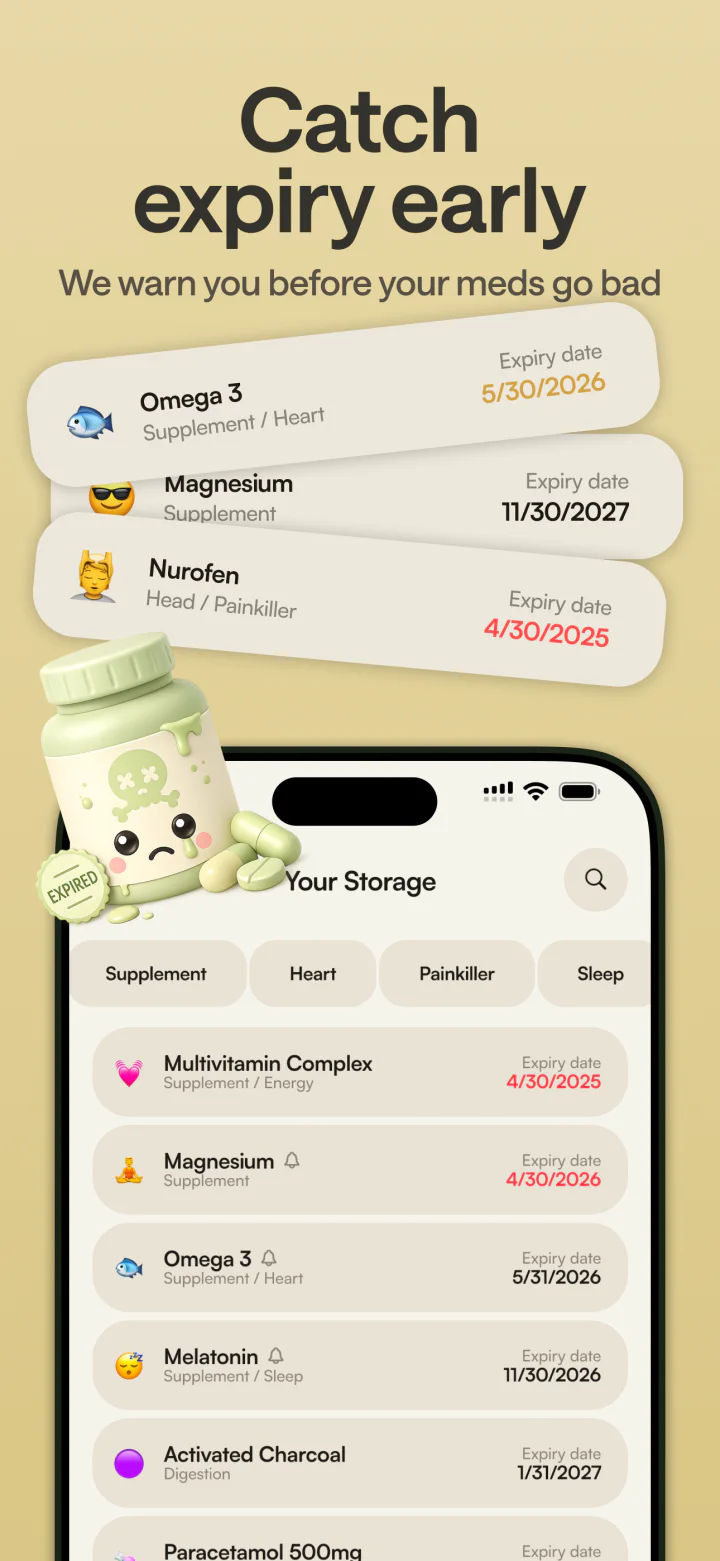
Pillo is an iPhone pill reminder built for this loop. You can create daily, weekday, custom-day, or multiple-times-per-day schedules, then mark a dose as taken. Course dates, remaining stock, and medicine expiry dates can live in the same private cabinet on your phone.
Pillo is a reminder and organization tool. It does not decide when or how you should take medicine, so enter the schedule exactly as provided by your pharmacist or prescriber.
Download PilloOther solutions that may work better
An app is not the only good option. The best system is the one you can use safely and consistently.
- A simple alarm: useful for one dose at the same time each day. Rename the alarm so the action is clear.
- A paper tick chart: useful when you want a visible record without a phone.
- A pill organizer: useful for some regimens, but ask a pharmacist first. Some medicines need their original packaging or particular storage conditions.
- Support from another person: a family member, friend, carer, or formal reminder service can help when memory difficulties are significant.
- A medication review: if the schedule feels too complicated, ask a pharmacist or prescriber whether it can be simplified. Do not simplify it yourself.
Plan for busy and unusual days
A routine that only works at home will eventually fail. Decide in advance what happens when you travel, sleep late, eat at a different time, or lose phone signal.
- Keep the current medication list and prescriber details accessible.
- Carry only what you need in a safe container that follows the medicine's storage instructions.
- Check time-zone changes with a pharmacist when exact timing matters.
- Set refill reminders early enough to handle weekends, holidays, or travel.
- Keep a non-phone backup if losing power would leave you without the schedule.
A seven-day reminder setup
- Write down the prescribed schedule. Use the label and professional instructions.
- Choose one existing routine anchor. Match it to the correct timing and food requirements.
- Create one named reminder. Include the medicine and the intended action.
- Add a confirmation method. Use an app check-off, a chart, or another clear record.
- Test the system on a busy day. Notice where the reminder appears and whether you can act on it safely.
- Prepare a backup. Decide what you will use if the phone is unavailable or the routine changes.
- Review after one week. Adjust the reminder system, but do not change the prescribed regimen without advice.
Common questions
What is the easiest way to remember daily medicine?
Connect the dose to a routine that already happens at the right time, then add one clear reminder and a way to record that the dose was taken.
Should I use a pill organizer?
A pill organizer can help some people, but not every medicine should be removed from its original packaging. Ask a pharmacist whether an organizer is suitable for your medicines.
What should I do if I forget a dose?
Check the medicine leaflet or instructions and contact a pharmacist or prescriber if you are unsure. Do not double the next dose unless a qualified health professional or the instructions specifically tell you to.
Sources and further reading
- NHS Specialist Pharmacy Service: Reminding to take medicines
- Guy's and St Thomas' NHS Foundation Trust: MedTap medicine guidance
This article provides general information and is not medical advice. Follow the instructions supplied with your medicine and ask a pharmacist, doctor, or other qualified professional about your individual regimen.