A sugar craving can be intense without being an instruction. The goal is not to win an argument with yourself. It is to create enough space to notice hunger, triggers, and the choice that fits your plan.
Check whether you are hungry
Cambridge University Hospitals describes a useful distinction: hunger can usually be satisfied by a range of foods, while a craving often feels as if only one specific food will do. The two can overlap, so start with the basic question: when did you last eat a normal meal or snack?
If you are physically hungry, eating a balanced meal or snack may be the sensible response. Delaying food when you need it can make the next decision harder. If the urge is specific and appears even though you are not hungry, use a brief craving plan.
If you have diabetes, hypoglycemia, an eating disorder, another medical condition, or symptoms such as shaking, confusion, or faintness, follow your clinical plan and seek appropriate medical help. Do not use a general craving technique instead of treatment.
Use a short response plan
- Pause. Give yourself a few slow breaths before opening the package or ordering.
- Name what is happening. “I want something sweet after a difficult meeting” is more useful than “I have no willpower.”
- Check hunger and thirst. Eat or drink appropriately rather than assuming every urge has the same cause.
- Change the immediate context. Leave the kitchen, close the delivery app, brush your teeth, or start a short task.
- Choose on purpose. Use the alternative you planned, have a portion without self-criticism, or continue the pause if the urge is changing.
The pause is not a promise that every craving will disappear. It is a way to interrupt automatic action and collect enough information for a deliberate choice.
Learn the trigger after the moment
Keep the note short. Record the time, situation, hunger level, emotion, and what you did. After several entries, look for a repeat pattern rather than analyzing each craving in isolation.
- Long gap between meals
- Stress after work
- Low sleep or late evening
- Visible food at home
- Social plans or celebration
- A rule that feels too strict
Tracking can show that the problem is not the sweet food itself. The useful change may be a more regular lunch, an earlier bedtime, a planned dessert, or less convenient access to a trigger food.

Where Steady can help
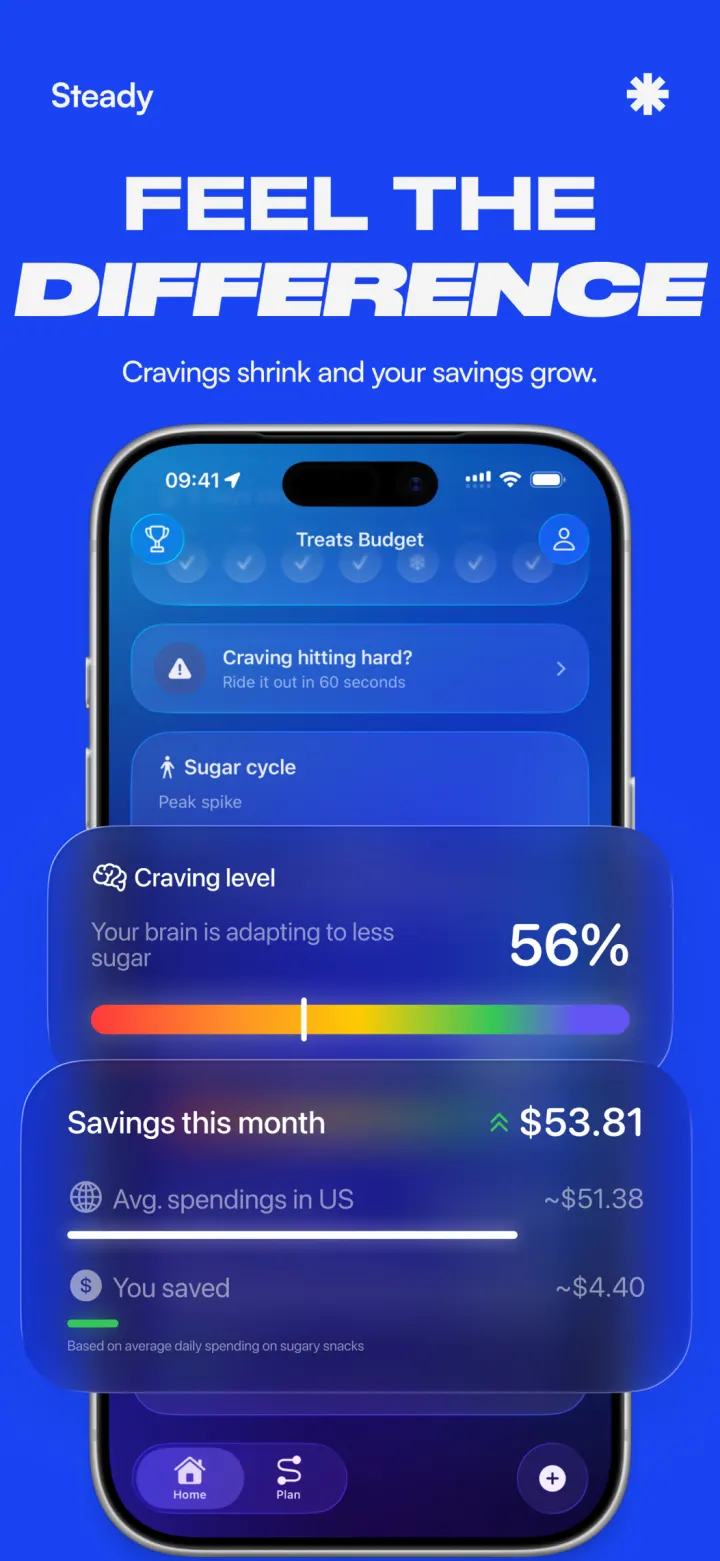
Steady includes a Panic mode for an in-the-moment guided reset, plus craving-level tracking inside a personalized 90-day plan. Treat or gram logging and a daily sugar budget can help connect the craving to the larger pattern.
Steady is a habit and motivation tool, not a medical device. It does not diagnose the reason for a craving or replace individualized care.
Download SteadyChange the environment before the next craving
Willpower has to be used in the hardest moment. Environment can do some of the work earlier.
- Keep the drink or snack you plan to choose visible and ready.
- Buy a smaller package when a large package makes stopping difficult.
- Do not shop when very hungry if that changes what you buy.
- Decide how dessert fits before the evening begins.
- Remove saved payment or one-tap ordering if delivery is the recurring trigger.
- Tell a supportive person what kind of help is useful and what is not.
A rigid environment can also backfire. The goal is to support a realistic plan, not create fear around food.
Other tools that can help
- A note card: write your five-step response and keep it where the craving usually happens.
- A kitchen timer: use it to define a short pause, not to prove that you can endure hunger.
- A simple log: paper or phone notes are enough to identify repeat triggers.
- Professional support: a registered dietitian, therapist, or clinician can help when cravings are connected to a medical condition, binge eating, restriction, or significant distress.
Continue after a setback
NIDDK guidance on changing habits emphasizes that setbacks are expected and that tracking can help people spot strengths and roadblocks. One sweet food, one evening, or one difficult week does not erase the pattern you are building.
- Return to the next normal meal or planned action.
- Avoid compensation through extreme restriction.
- Write down one useful fact about the trigger.
- Change the plan if the same obstacle keeps returning.
Common questions
What can I do immediately when I crave sugar?
Pause briefly, check whether you are physically hungry, name the trigger, change the immediate context, and then choose a planned response. A craving is information, not a pass-fail test.
Is a sugar craving the same as hunger?
Not always. Hunger can usually be satisfied by a range of foods, while a craving often feels specific. If you are hungry, a normal balanced meal or snack may be the appropriate response.
Does one sweet food ruin my progress?
No. One choice does not erase a broader pattern. Return to the next planned action and use the situation to identify a trigger or an unrealistic part of the plan.
Sources and further reading
- Cambridge University Hospitals NHS Foundation Trust: Dealing with food cravings
- NIDDK: Changing Your Habits for Better Health
- American Heart Association: Tips for Cutting Down on Sugar
This article provides general information, not medical advice or eating-disorder treatment. Seek qualified help for symptoms, significant distress, or dietary changes related to a health condition.