Reducing added sugar does not require treating every sweet food as a failure. A practical plan starts by separating added sugar from naturally occurring sugar, finding your biggest repeat source, and choosing a smaller next step.
Know what you are reducing
Added sugars are sugars put into foods or drinks during processing or preparation. Naturally occurring sugars in whole fruit and unsweetened milk are not added sugars. The World Health Organization uses the wider term “free sugars,” which also includes sugars in honey, syrups, fruit juice, and fruit juice concentrates.
WHO recommends limiting free sugars to less than 10 percent of total daily energy intake, with a further reduction to 5 percent or less potentially providing additional benefits. That is population guidance, not a personalized prescription.
You do not need to remove whole fruit, vegetables, or unsweetened dairy just because they contain sugar. Focus first on added or free sugars and the overall quality of your diet.
Find your baseline without changing anything
Track three ordinary days before setting a target. Include one weekday and one weekend day if your routine changes. Record the food or drink, the serving, and the added sugar shown on the label when available.
The Centers for Disease Control and Prevention identifies sugar-sweetened beverages, desserts, and sweet snacks as leading sources of added sugar in the U.S. diet. Starting with the largest frequent source usually creates more impact than searching every condiment for a small amount.
- Sweetened coffee or tea
- Soda and energy drinks
- Desserts and sweet snacks
- Sweetened yogurt or cereal
- Sauces and dressings
- Weekend or evening treats
Read the serving size first
On U.S. Nutrition Facts labels, compare the serving size with the amount you actually eat or drink, then find the Added Sugars line. Ingredient lists can also reveal sugars and syrups used during processing. Label formats differ by country, so use the local nutrition panel and official guidance.
Choose one high-impact swap
Choose a change that you can repeat several times each week. A smaller drink, an unsweetened version, or fewer spoonfuls added at home may be easier to sustain than removing every sweet food at once.
- Sweetened drinks: move toward water, sparkling water, or an unsweetened drink you already enjoy.
- Coffee and tea: reduce the sugar or syrup in steps so taste can adjust.
- Breakfast: compare labels for cereals and yogurts, then add whole fruit when you want sweetness.
- Dessert: choose a smaller portion, share it, or decide in advance which occasions matter most.
- Cooking: reduce added sugar in familiar recipes gradually and use flavor from fruit or spices where appropriate.
The American Heart Association also recommends comparing labels, reducing sugar added at the table, and making gradual changes to sweetened drinks and recipes.

Where Steady can help
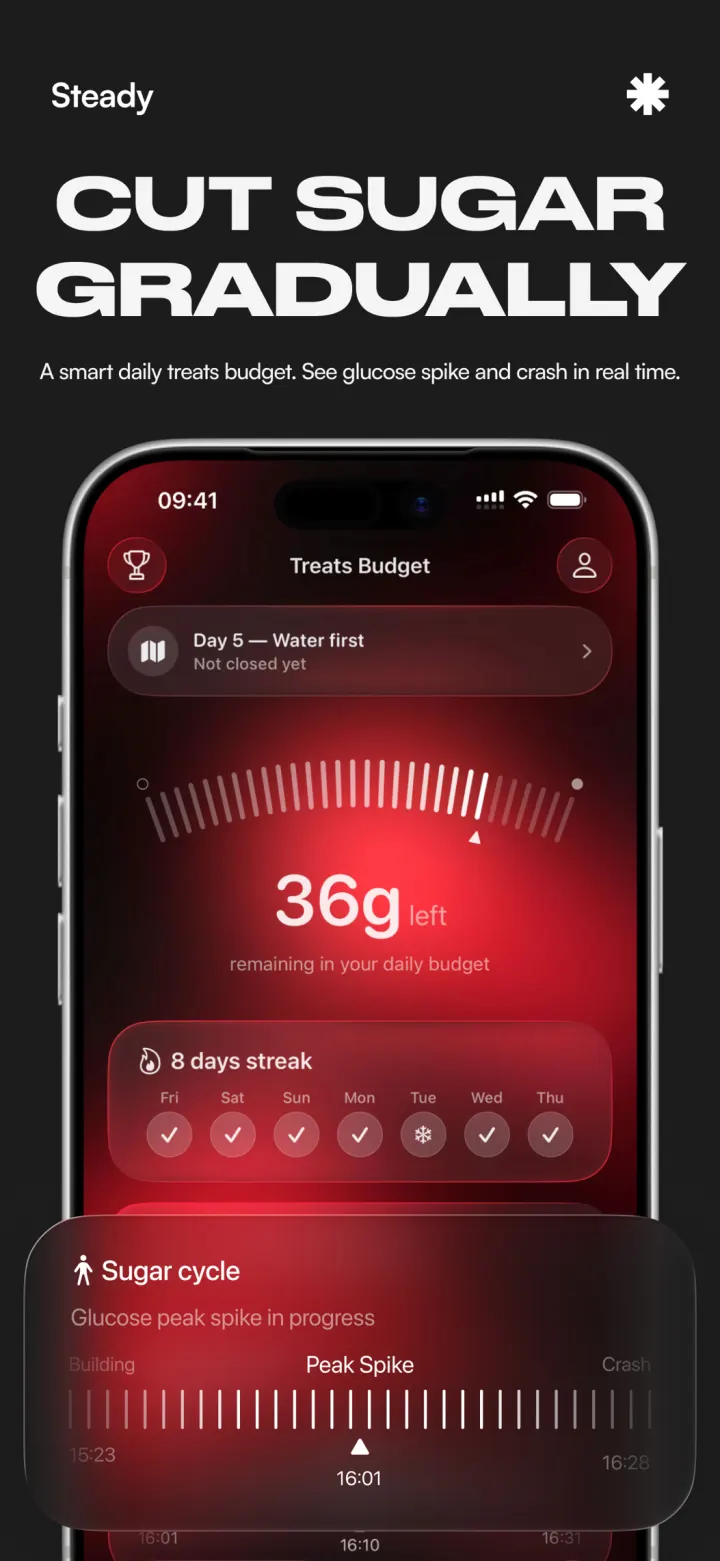
Steady is an iPhone habit app with a personalized 90-day plan, treat or gram logging, and a daily sugar budget that changes over time. It can turn a broad goal into one daily action and make the pattern visible.
Steady is not a medical device and does not provide individualized nutrition or medical advice. If you have diabetes, hypoglycemia, an eating disorder, another medical condition, or if you are pregnant or nursing, discuss dietary changes with a qualified professional.
Download SteadyBuild a gradual four-week plan
Week one: observe
Track your usual choices and identify the one source that contributes the most often. Note the time, place, and situation around it.
Week two: change one repeat source
Pick one realistic reduction. Keep the rest of your routine stable so you can tell whether the change is workable.
Week three: make the easier choice easier
Place water where you normally reach for soda, buy an unsweetened default, or portion a treat before sitting down. Environment reduces the number of decisions you need to make.
Week four: review and choose the next step
Look at what happened across the week. Keep a change that feels sustainable. If it was too difficult, reduce the size of the step instead of abandoning the goal.
Other useful solutions
- A paper or notes-app log: enough for spotting repeated sources without learning another app.
- A nutrition-label routine: compare two products you buy often rather than trying to research everything.
- Household support: agree on one shared default drink or snack so the environment supports the change.
- A registered dietitian or qualified clinician: important when dietary changes interact with medication, a medical condition, pregnancy, or disordered eating.
Treat setbacks as information
The National Institute of Diabetes and Digestive and Kidney Diseases describes habit change as a process with preparation, action, and maintenance. It also emphasizes that setbacks happen and do not mean the effort has failed.
After a higher-sugar day, return to the next planned action. Note what made the situation difficult: hunger, access, stress, sleep, social plans, or an unrealistic target. That information can improve the system.
Common questions
Do I need to stop eating all sugar?
No. Public-health guidance focuses on limiting added or free sugars, not removing nutritious foods such as whole fruit or unsweetened milk solely because they contain naturally occurring sugars.
Is it better to reduce added sugar gradually?
A gradual approach can be practical when it helps you make repeatable changes. Start with a major source you consume often, track the pattern, and adjust the next step based on what you can sustain.
How can I find added sugar on a food label?
On U.S. Nutrition Facts labels, check the Added Sugars line and the serving size. The ingredient list can also show sugars and syrups used during processing.
Sources and further reading
- World Health Organization: Healthy diet
- CDC: Get the Facts, Added Sugars
- CDC: Nutrition Facts Label and Your Health
- American Heart Association: Tips for Cutting Down on Sugar
- NIDDK: Changing Your Habits for Better Health
This article provides general information, not medical advice. Nutrition needs vary. Ask a qualified professional about a plan for your health circumstances.